The Solar Tax Credit Alternative for 2026

The credit homeowners claimed themselves expired on December 31, 2025. The commercial credit behind it did not, and it runs through 2027. Here is how that value still reaches you, as a discount off your price rather than a refund at tax time.

Compare Both Programs
📈
Up to 35–40% Off System Price
|
📝
Nothing to File on Your Taxes
|
✅
No Tax Liability Needed
|
🕑
Section 48E Runs Through 2027
The Short Answer

One Credit Ended. A Different One Did Not.

The 30% credit homeowners claimed on their own returns, Section 25D, expired on December 31, 2025. The commercial clean electricity credit, Section 48E, did not. It runs through 2027. The difference matters because a commercial owner can still claim it, and there are now financing structures built specifically to hand that value back to you.

1

A commercial owner takes title to the system

Participate Energy or Concert Finance holds ownership of the equipment on your roof for an initial term. That commercial ownership is what makes the project eligible for a credit no longer available to you directly.

2

The credit value comes back as a price cut

Rather than a refund at tax time, the value is applied to your system price before anything is signed or financed. You see a smaller number on the proposal, and that smaller number is what you pay or finance.

3

You get a path back to ownership

Both programs include a route to owning the system outright. Propel transfers at Year 5. Participate opens a purchase option at Year 6 and on each anniversary after, at fair market value.

*
Rates and discount tiers change, and Propel's have been moving upward. Every APR, discount percentage and payment figure on this page reflects the program terms we had on record at the time of writing, and the rate quoted on a proposal issued today may be higher. Pricing is locked when your loan is signed, not when you first see a number, so the practical advice is to move while a quote is live.
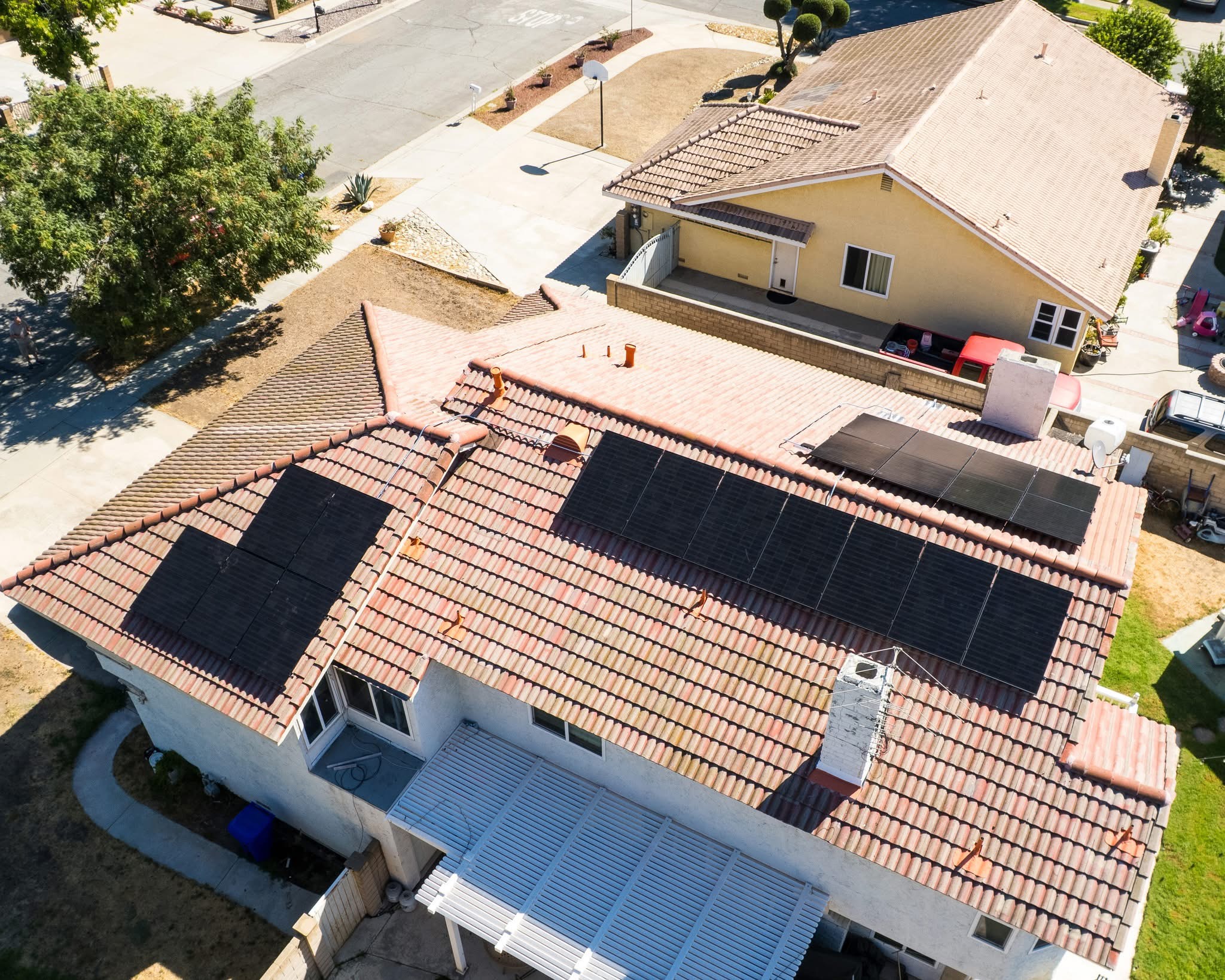
Aerial view of a California home with rooftop solar installed under a commercial tax credit passthrough
Old Credit vs. What Replaced It

Why This Is Better for Some Households Than the Old Credit Was

The 25D credit was worth 30%, but only if you had the federal tax liability to absorb it and the patience to wait for tax season. For a large share of homeowners it was worth considerably less than the headline.

 Old 25D Credit (expired)48E Passthrough (2026)
When you get the valueAt tax time, the following yearBefore you sign, off the price
Tax liability requiredYes, or the credit carries forwardNone
Paperwork you fileIRS Form 5695Nothing
Value if you are retired or low-liabilityOften far less than 30%Full discount regardless
You own the systemImmediatelyAfter the initial term
Available nowNo, ended 12/31/2025Yes, through 2027
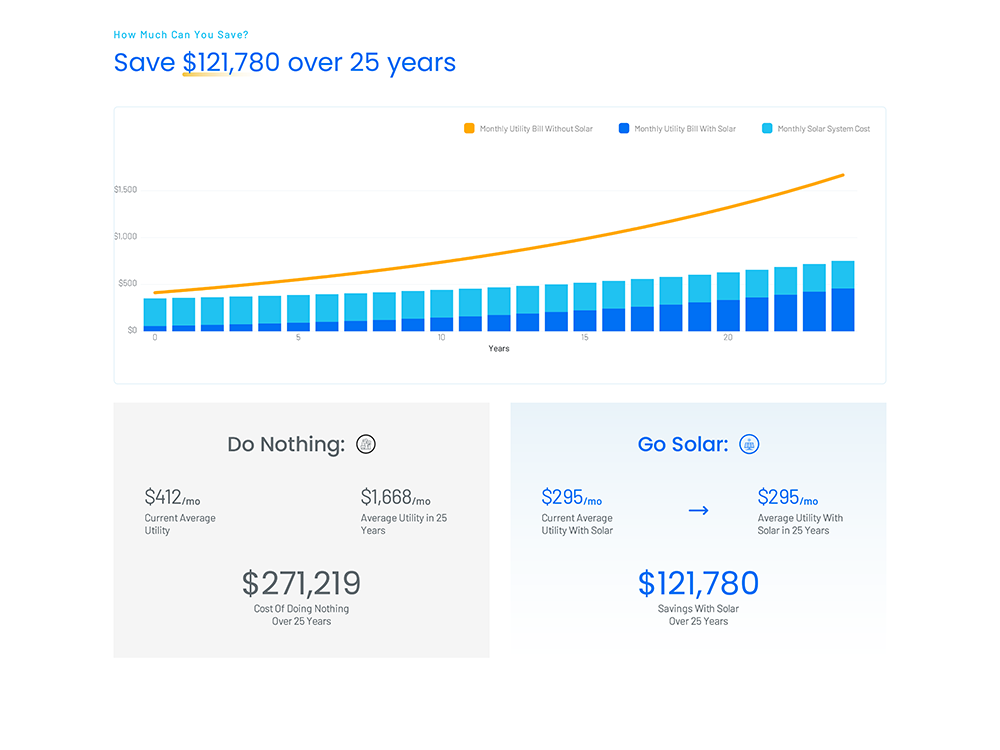
Proposal slide showing projected savings after the commercial credit discount is applied
A real proposal slide: the discount is applied to the price before financing, not refunded later.

The honest tradeoff is ownership timing. You are trading immediate title for a discount you can no longer get any other way. For a homeowner who was never going to absorb a $15,000 credit against their tax bill, that is not much of a trade.

Your Two Options

The Two Programs That Do This

We run both on every eligible home, because which one wins depends on your address and your situation rather than on which one we would rather sell.

Propel by Concert Finance

A loan with up to 20% off a solar-only system and up to 35 to 40% once storage is included, plus Energy Community and domestic content bonuses. Terms from 5 to 25 years, no dealer fee, no prepayment penalty, 660 FICO minimum. Accepts manufactured homes and multi-unit properties. California, Colorado and Texas.

See full Propel terms →

Compare Propel and Participate side by side on the same home →
Common Questions

What Homeowners Ask About the 2026 Tax Credit Change

The questions we field most often since the residential credit ended.

Is there a solar tax credit alternative in 2026?
Yes. The homeowner-claimed credit under Section 25D ended on December 31, 2025, but the commercial credit under Section 48E runs through 2027. A commercial owner can still claim it, and prepaid lease and third-party ownership structures exist specifically to pass that value back to you as a discount off your system price. You do not file anything and you do not need tax liability to benefit.
How much is the discount worth now?
It depends on the program and the equipment. Participate Energy's prepaid lease delivers 30% or 35%, decided by whether both the solar and the battery qualify as domestic content. Propel by Concert Finance delivers up to 20% on a solar-only system and up to 35 to 40% once storage is included, with Energy Community and domestic content bonuses stacking on top. A project qualifying for both bonuses can reach 37% or more.
Do I have to claim anything on my taxes?
No, and that is the practical advantage over the old credit. Under the previous 25D credit you paid full price, waited for tax season, and only captured the full 30% if you had enough federal tax liability to absorb it. Retirees and lower-income households frequently could not. Under these structures the discount is applied to your price before you sign, so there is nothing to file and nothing to wait for.
What is the catch compared to just buying the system?
You do not own the system during the initial term. A third party holds title so it can claim the credit, and you hold a purchase option, typically from Year 5 or Year 6. If immediate outright ownership matters more to you than the discount, buying with cash or a conventional loan is still the cleaner path. It just costs more now that you cannot claim 30% back.
Is this legitimate, or a workaround that could be reversed?
Third-party ownership has been a standard part of residential solar for well over a decade, and Section 48E is current federal law with a defined phase-out for facilities placed in service after December 31, 2027. What is new is not the structure but the fact that it is now the main route for a homeowner to capture credit value at all.
How long will this be available?
Section 48E phases out for solar facilities placed in service after December 31, 2027. That is the outer boundary, not a guarantee that today's terms last until then. Discount tiers and financing rates are set by the providers and have been moving, so the terms available now are not necessarily the terms available in six months.
Which program is better for my home?
It depends on your zip code, whether you want storage, your credit situation, and the property type. Energy Community zip codes usually favor Propel. Non-Energy-Community addresses, cash buyers, rental and investment properties, and anyone who would rather not be credit-underwritten usually favor Participate. We run both on your actual roof and utility rate before recommending either.
Tesla Powerwall 3 battery installed in a California garage

See What the Discount Is Worth on Your Roof

We run both programs against your actual utility rate, roof and usage, and show you both sets of numbers before you decide anything.

Takes 2 minutes · No obligation